The Best Time to Get Married in Miami (and the Plan B Behind Every Great Date)
When is the best time to get married in Miami? A luxury planner breaks down the seasons, hurricane season, Art Basel and the Plan B every date needs.

Mariane Fahmy
20+ Years Executive Operations & Luxury Event Design
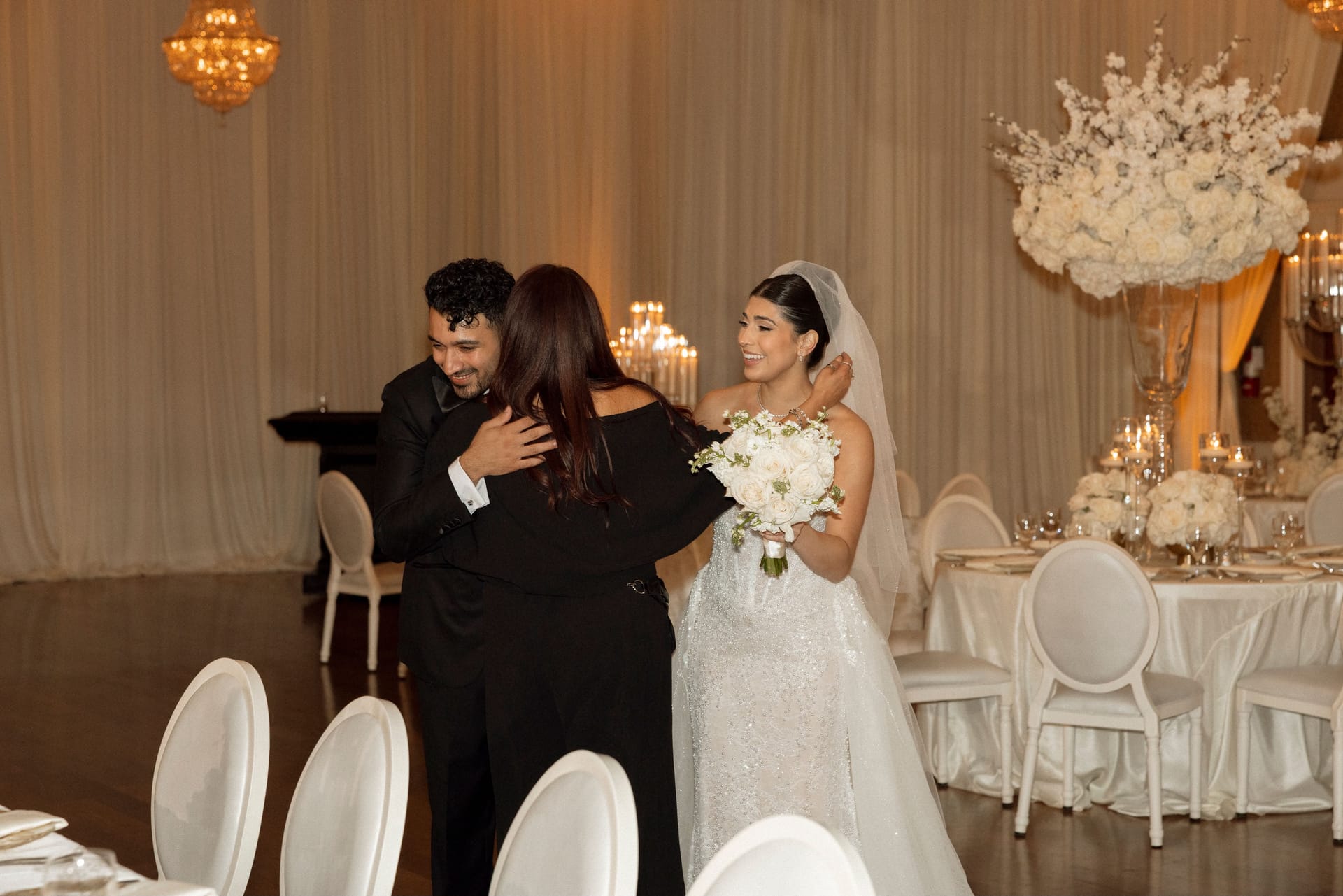
Luxury tented waterfront wedding reception in Miami with weather-ready design by Très CHIC • Photo courtesy of Très CHIC Event Planning & Design
It sounds like a weather question: when is the best time to get married in Miami? But after two decades in corporate leadership, running operations where the plan always changed at the worst possible moment, and now planning celebrations full time, I’ve come to see it as something else. It’s really a question about what has to be true for you to actually enjoy your wedding day.
Weather is part of that. So are your guests’ travel, your families’ traditions and, more than most couples expect, what happens when the plan changes. Let’s walk through all of it.
The short answer: November through April is Miami’s drier, more comfortable season, and December through March is the most in-demand stretch. You can absolutely marry between May and October, but those weddings are planned differently: indoor-ready venues, weather policies in writing and a real Plan B. Atlantic hurricane season runs June 1 through November 30, with activity typically peaking between mid-August and mid-October.
Miami’s wedding calendar, season by season
| When | What to expect | A planner’s note |
|---|---|---|
| December – March | Miami’s peak. Drier air, lower humidity, comfortable evenings. | Books first and is often the most expensive. Saturdays go earliest. Art Basel (first week of December) and Ultra (late March) can strain hotels and traffic. |
| April – early May | Still lovely, a little warmer, with showers beginning to return. | A good middle path: strong weather with a bit more availability. Keep a rain plan, and check the city’s event calendar. |
| Mid-May – October | Heat, humidity and regular afternoon showers. The heart of hurricane season. | Entirely possible, with conditions: an indoor-ready venue, written weather policies and cancellation coverage arranged early. Activity peaks from mid-August to mid-October. |
| November | Humidity eases and the rains taper. Officially still hurricane season. | An often overlooked sweet spot, usually with more availability than the winter peak. The Plan B still applies. |
Peak season is beautiful, and it’s crowded
Peak doesn’t mean effortless. Dates between December and March go first, Saturdays go fastest, and venues and planners in this market commonly book twelve months out or more, often longer for a multi-day celebration.
That demand reaches your guests, too. Art Basel arrives in the first week of December, and Ultra and Miami Music Week fill late March. Both can tighten hotel availability and slow traffic across the city. If your guests are flying in, I’d check the event calendar before you fall in love with a weekend.
Can you get married in Miami in summer or fall?
Yes. Plenty of couples do, for reasons that are personal, practical or both. I simply ask them to plan it with open eyes.
Summer in Miami is hot, humid and punctuated by afternoon showers. That’s weather you can design around with shade, air conditioning and a later start. Hurricane season is a different kind of question. Most days within it are ordinary ones, but the risk isn’t spread evenly: the National Hurricane Center places the climatological peak on September 10, with most activity between mid-August and mid-October.
What it changes is mostly structural: a venue with a genuine indoor or fully covered option, vendors who have worked in these months, and paperwork you’ve read before you need it.
November deserves a second look
By mid-November the humidity eases and the afternoon storms taper, and venues that are full in January often have more availability. It is also, technically, still hurricane season. Hurricane Nicole reached Florida’s east coast as a minimal hurricane on November 10, 2022.
None of this is a reason to avoid November. It’s a reason not to confuse “usually lovely” with “guaranteed.”
Your date also belongs to your families
For the multicultural and fusion celebrations I love most, weather is only one of the calendars you’re working with.
- Jewish weddings. Many couples avoid Shabbat and holidays, so a Saturday celebration typically begins after nightfall. That shapes venue timing, guest transportation and the entire evening.
- Hindu ceremonies. Dates and times are often chosen around an auspicious moment, or muhurat, set with a priest or pandit. It won’t always land on a convenient Saturday night.
- Muslim celebrations. Ramadan follows the lunar calendar and arrives roughly ten days earlier each year, so a date that works beautifully one year may not the next.
I don’t assume how a tradition should shape your date. I ask which ones matter to your family, and to theirs, and we build the calendar around the answer. That conversation is best had before a venue contract is signed.
The question underneath the question
Here’s what I’ve learned from planning celebrations that span several days and several cultures: the date you choose won’t be what decides how your wedding feels. What decides it is what happens when something doesn’t go to plan.
On the first day of a four-day wedding celebration, the venue unexpectedly cancelled on us. A major event was suddenly in jeopardy, and the family was minutes away from hearing about it.
Before I told the couple, I went to work. Within about four hours I had secured a replacement venue, coordinated the vendors around it and made sure the original venue took responsibility for the costs of the change. Only then did I tell the family, with clear directions to the new location and a plan for getting every guest there smoothly.
They never spent a moment of that celebration in panic. They spent it with the people they love.
A storm, a heat wave, a late vendor and a closed road are all versions of that same phone call. A great plan isn’t one that never changes. It’s one where someone already knows what to do when it does.
Your Plan B, in six lines
So, when should you get married in Miami?
- Want the most dependable weather and the full Miami-in-winter energy? December through March. Book early.
- Want beautiful weather with a little more room to breathe? Look at November or April through early May.
- Drawn to summer or early fall, for your budget, your guests or a date that means something? Absolutely, with a covered venue, written policies and coverage in place early.
- Is your family’s calendar leading the way? Start there. We’ll find the weather around it.
If you’re weighing dates right now, I’d love to hear about your celebration: your families, your traditions, the feeling you want your guests to have. Start planning and we’ll have a real conversation, not a sales call.
Thinking bigger than one weekend? Explore my guides to planning a destination wedding in Miami and choosing between full-service and partial planning, or see how I approach multicultural and fusion weddings.
Frequently asked questions
What is the best month to get married in Miami?
November through April is Miami’s drier, more comfortable season, with December through March the most sought-after. November and April are often a good balance for couples who want strong weather with a little more availability.
Is hurricane season a bad time to get married in Miami?
Not automatically. Hurricane season runs June 1 through November 30, and activity is highest from mid-August to mid-October. Couples marrying in these months should choose a venue with an indoor or covered option, get weather and postponement policies in writing, and arrange cancellation coverage early.
Is November a good month for a Miami wedding?
Often, yes. Humidity eases and the afternoon storms taper, and there is usually more venue availability than in the winter peak. It is still technically hurricane season, so keep a Plan B.
How far in advance should I book a Miami wedding?
For a Saturday in peak season, a year or more is common. For a multi-day or multicultural celebration, often longer. Off-peak dates and weekdays can give you more flexibility.
Do I need wedding insurance for a Miami wedding?
Many couples consider event cancellation insurance, especially for dates between June and November. Because insurers generally treat a forecast or named storm as a “known event,” timing matters. I’m a planner, not an insurance advisor, so read the policy closely and speak with a licensed agent.
How do Art Basel and Ultra affect a Miami wedding?
Both can tighten hotel availability and slow traffic. Check the city’s event calendar when choosing your date, and reserve guest room blocks early.
About the Author
Mariane Fahmy
Mariane Fahmy is the Founder and Lead Luxury Designer of Très CHIC Event Planning & Design. Backed by 20 years of corporate operations and high-stakes logistics, she orchestrates elevated multicultural weddings, historic estate celebrations, and bespoke destination weddings across Miami, Fort Lauderdale, and worldwide.